
Golf Ball Factories & Facts
13. Oktober 2026
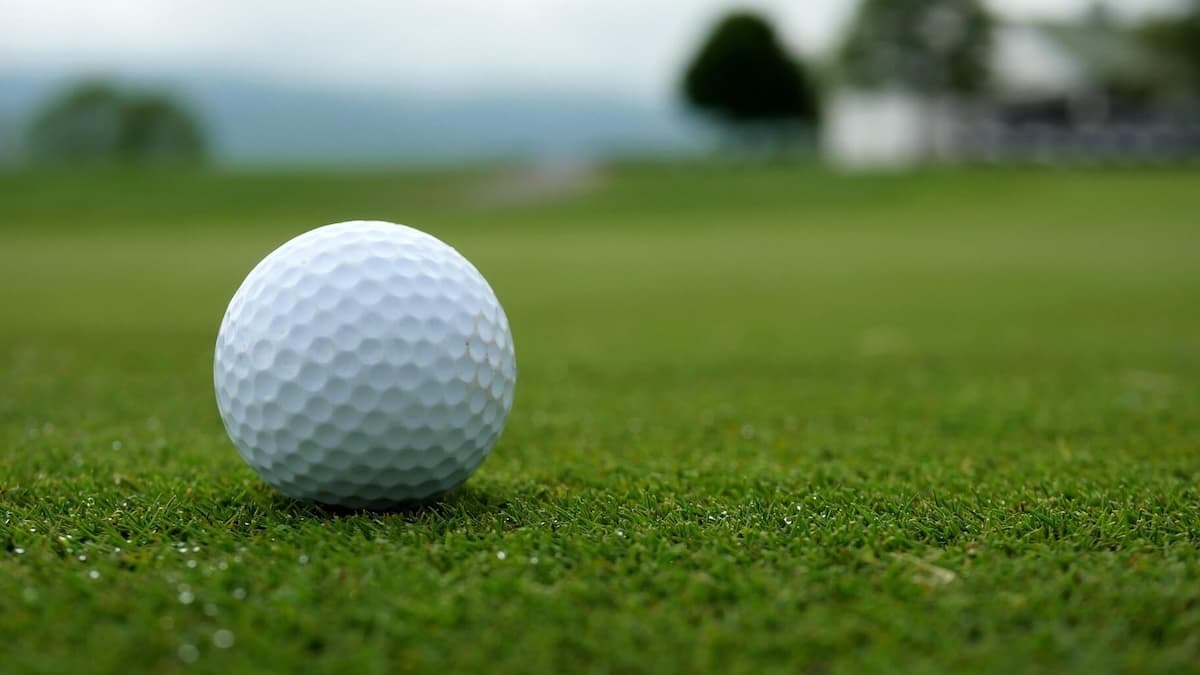
Golf Ball Factories & Facts is a short golf blog post that takes a look at where golf balls are made and a few interesting facts.
Every weekend when we step onto the first tee, we pull out a fresh golf ball and launch it into the air without giving much thought to where it came from.
Yet behind that pristine white (or high-visibility colours) sphere lies one of the most precise, tightly guarded manufacturing networks in global sports.
The journey of a modern golf ball is a fascinating story of global engineering, strict quality control, and massive industrial scale.
Let's take a look at the secretive factories that build our golf balls and explore the staggering numbers powering the industry.
The Global Engine: Where Golf Balls Are Actually Born.
While golf club assembly spans multiple countries, premium golf ball manufacturing relies heavily on specialised factories that handle delicate polybutadiene cores and cast urethane covers.
1. New Bedford, Massachusetts, USA (Titleist).
The spiritual capital of golf ball production sits in New Bedford. Acushnet (Titleist's parent company) operates Ball Plant 3 in Fairhaven and Ball Plant 2 in North Dartmouth. These massive, highly automated facilities produce the Pro V1, Pro V1x, and AVX lines.
Titleist is unique because it makes 100% of its ball lineup in its own company-owned plants—including range balls and two-piece distance offerings—supplemented by an overseas facility in Thailand to serve the Asia-Pacific market.
2. Chicopee, Massachusetts, USA (Callaway)
Just a two-hour drive west of New Bedford lies Chicopee, the heart of Callaway’s golf ball operations.
Callaway has invested tens of millions of dollars into upgrading this historic facility with precision 3D X-ray inspection technology.
Every single premium Callaway ball—including the Chrome Tour, Chrome Soft, and Chrome Tour X—is crafted here from core to cover.
3. Kobe, Japan & Chichibu, Japan (Srixon & Bridgestone)
Japan is home to incredible polyurethane chemical manufacturing and precision rubber engineering.
Sumitomo Rubber Industries (Srixon/Cleveand) manufactures its tour-level Z-Star family in Japan alongside facilities in Indonesia.
Meanwhile, Bridgestone crafts its Tour B series in its high-tech Chichibu plant in Japan, as well as in Covington, Georgia, for North American markets.
4. Liberty, South Carolina & Taiwan / Korea (TaylorMade)
TaylorMade utilises a hybrid global supply chain. Its premium TP5 and TP5x tour balls feature high-speed cores manufactured in Taiwan and South Korea, which are then finished with cast urethane covers and final quality checks at its dedicated ball facility in Liberty, South Carolina.
5. Qingdao & Taichung: The OEM Powerhouses
Beyond the big brands, specialised original equipment manufacturer (OEM) factories like Launch Technologies and Foremost Golf in Taiwan and China produce millions of golf balls for direct-to-consumer brands, value lines, and practice facilities worldwide.
Mind-Blowing Golf Ball Facts & Figures
When you zoom out from the factories, the pure mathematics of golf ball production and consumption is astounding.
- 1.2 Billion Balls Per Year: Global manufacturers produce roughly 1.2 billion golf balls annually to supply the world's estimated 60 million golfers.
- 1 Million Per Day in Mass: Titleist alone produces over one million golf balls every single day across its Massachusetts facilities to meet global demand.
- $1.6 Billion Market: The global golf ball market is currently valued at roughly $1.61 billion annually and continues to grow alongside post-pandemic participation surges.
- 120 Quality Checks: A premium dual-core urethane golf ball goes through up to 120 separate quality and tolerance checks before it is boxed, including real-time X-ray scans to verify core concentricity.
- 332 to 388 Dimples: The average tour ball features between 330 and 390 dimples designed to create a turbulent boundary layer of air, cutting aerodynamic drag in half compared to a smooth sphere.
- 300 Million Lost Balls: In the United States alone, an estimated 300 million golf balls are lost by players every year in water hazards, dense rough, and wooded areas.
- 160 Degrees Fahrenheit: Cores are cured under immense heat—often around 160°F to 300°F depending on the rubber blend—and pressurised at thousands of pounds per square inch to deliver optimal energy transfer (COR).
- 30 Miles of Scuba Diving: Commercial golf ball divers retrieve roughly 2,000 to 5,000 balls per day out of water hazards at major golf resorts, feeding a massive reconditioned ball market.
The Takeaway for Your Game
Next time you open a sleeve on the first tee, take a second to appreciate what is in your hand.
That little ball represents a journey through high-temperature rubber presses, precise chemical curing, robotic painting bays, and rigorous aerodynamic testing.
Knowing the craft that goes into making it might not cure a slice, but it gives us a whole new appreciation for the gear that powers the game we love.
What are your thoughts on Golf Ball Factories & Facts?
What is your favourite Golf Ball?
To read more of my golf blog posts, click here.