
The RRS Discovery
24 November 2026
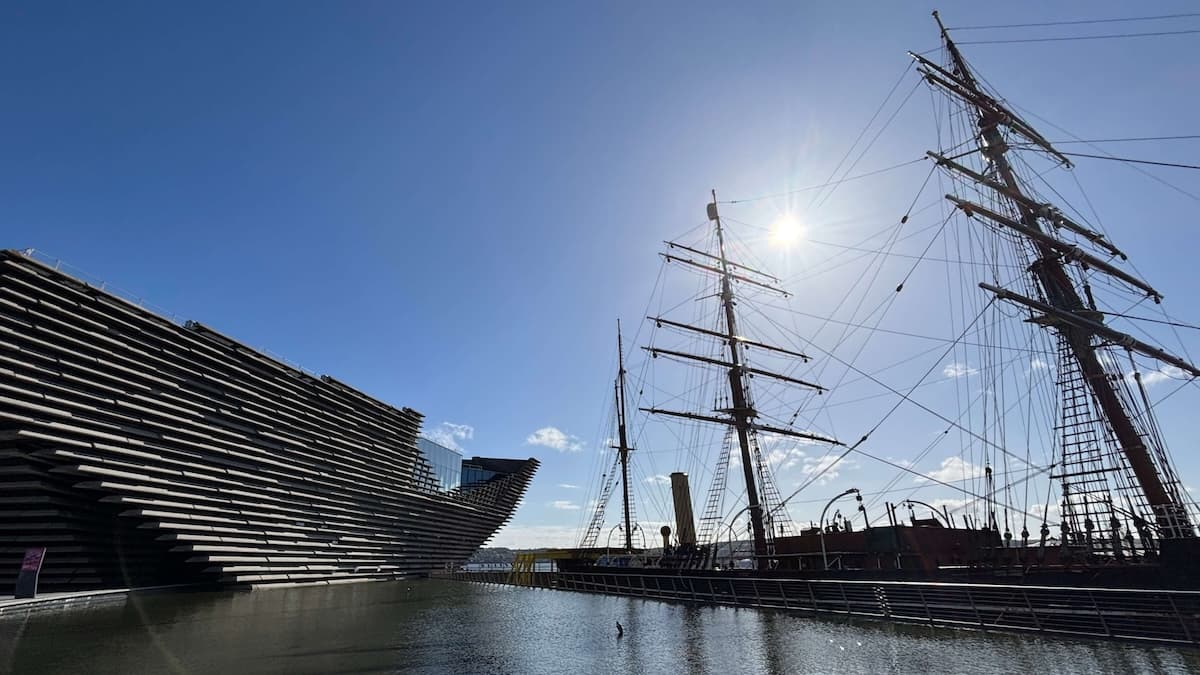
The RRS Discovery is a short golf blog post that takes a look at one of the best off-course experiences in Scotland.
When golfers cross the Tay Road Bridge heading north from St Andrews toward Carnoustie, Monifieth, or the links of Angus, they usually fix their eyes on the wind over the Firth of Tay and the promise of firm, fast turf ahead. Yet sitting directly on the Dundee waterfront—barely 20 minutes from the Old Course and 15 minutes from Carnoustie's first tee—is one of Scotland’s greatest off-course experiences: the RRS Discovery.

As a PGA Professional who spends much of my life crafting bespoke golf itineraries across Scotland, I always tell visiting golfers that the magic of a Scottish golf trip lies in what happens after the struggle on the links, after the final putt drops.
The RRS Discovery is not merely a maritime museum; it is a masterclass in grit, preparation, and Scottish craftsmanship.

Built for the Unthinkable: The History of RRS Discovery.
At the turn of the 20th century, Dundee was the undisputed capital of Britain’s whaling and shipbuilding industries—the only port in the UK with the expertise to construct a wooden vessel capable of surviving the crushing pack ice of the Southern Ocean.
The Dundee Shipbuilders Company laid down the Royal Research Ship (RRS) Discovery in March 1900 and launched it in 1901.
It was the last traditional wooden three-masted barque built in Britain. Her hull was an engineering marvel: over two feet thick at the sides, built from Scottish oak and sheathed in greenheart and ironbark, with a bow nine feet thick designed to ram pack ice. Even her rudder and propeller could be hoisted onto the deck to prevent ice damage—and she was built without a single porthole, as glass openings would have weakened the sides under extreme ice pressure.

Commanded by Captain Robert Falcon Scott—and carrying a young third officer named Ernest Shackleton—Discovery departed for the British National Antarctic Expedition (1901–1904). Locked in the ice of McMurdo Sound for two consecutive winters, the crew endured temperatures plummeting below -40°C while conducting groundbreaking scientific research in meteorology, magnetism, and marine biology.

Stories from the Ice:
- The 93-Day March South: In November 1902, Scott, Shackleton, and zoologist Edward Wilson set off across the Ross Ice Shelf to push further south than any human had ever ventured. Hauling five sledges loaded with nearly a ton of gear, the trio reached a record 82° 17′ South before blizzards, scurvy, and failing dogs forced them to turn back. By sheer grit, they dragged themselves across 950 miles of frozen wasteland over 93 days—with Shackleton so gravely ill he had to be strapped to a sledge before staggering back into Winter Quarters Bay.

- Beating Polar Boredom with The South Polar Times: During the pitch-black Antarctic winter months when the sun never rose above the horizon, cabin fever was as dangerous as frostbite. To keep morale high, Ernest Shackleton edited an onboard monthly magazine called The South Polar Times. Typed on a single typewriter, illustrated by hand, and read aloud to the entire crew after dinner, it featured weather reports, satirical poems, puzzles, and caricatures of life aboard—proving that good humour and camaraderie in the clubhouse (or wardroom) have always been essential to surviving tough conditions.

- Blasting Free from the Ice: By early 1904, Discovery had been frozen solid in McMurdo Sound for nearly two years. Two relief ships arrived with orders from the Admiralty to abandon the vessel if she could not be freed. Crews spent weeks sawing through 17-mile stretches of thick sea ice by hand before finally using controlled gun-cotton explosions on February 16, 1904, to shatter the remaining ice barrier and set Discovery loose for home.
After returning to Britain to a heroes' welcome, she continued serving as an oceanographic research vessel into the 1920s and 1930s—including a return to Antarctica under Sir Douglas Mawson—before finally coming home to Dundee in 1986, where she rests today in her custom-built dock at Discovery Point.

Discovery Point: The Modern Museum Experience
Managed by the Dundee Heritage Trust, Discovery Point surrounds the ship with an interactive, five-star museum experience that pairs brilliantly with a half-day away from the links.
Before stepping onto the gangway, the modern galleries bring the 1901 expedition to life through rare archival film, personal diaries, original scientific instruments, and immersive audio-visual exhibits. Once aboard, you can walk the scrubbed pine decks beneath her 110-foot mainmast—where lookouts once scanned for leads in the pack ice—before heading below decks.

Seeing the tight quarters, the brass "ankle-basher" deck vents, and the Spartan simplicity of Captain Scott’s own cabin puts modern travel comforts into sharp perspective. For those seeking an extra thrill, Discovery Point even offers guided mast climbs overlooking the Tay estuary and the neighbouring V&A Dundee.

The Ultimate 19th Hole: The Wardroom Dinner Experience
For golf groups, corporate retreats, or intimate celebrations looking for a truly unforgettable evening in Scotland, nothing compares to the RRS Discovery Wardroom Dining Experience.

Tucked amidships below deck is the atmospheric, mahogany-panelled Officers’ Wardroom—the exact room where Scott, Shackleton, and their scientific officers dined, debated, and kept morale alive through the pitch-black Antarctic winters. Today, Dundee Heritage Trust opens this historic sanctum for private dining for 12 to 14 guests—an ideal size for three or four golf foursomes.

What the Evening Entails:
- A Traditional Scottish Welcome: Guests are piped aboard the vessel on the Dundee waterfront before enjoying a private drinks reception on deck overlooking the River Tay.
- After-Hours Private Tour: An expert guide leads your group above and below decks after the museum closes to the public, sharing untold stories of endurance and camaraderie.
- Five Courses at the Captain’s Table: You take your seats around the historic mahogany table, served by a dedicated private chef and discreet waiting team. The seasonal five-course menu showcases Scotland’s finest larder—think Loch Duart hot-smoked salmon, aged Aberdeen Angus beef, Isle of Gigha halibut, or Perthshire loin of lamb, finished with Shackleton Whisky and vanilla panna cotta.
- Bespoke Heritage Touches: Every guest receives personalised menus, handcrafted place cards, and dines on fine china inspired by the original 1901 expedition tableware.
A huge thank you to Julie Cumming at the Dundee Heritage Trust for the invitation to dine at the Captain's Table; it was an absolute pleasure.
What are your thoughts on The RRS Discovery?
Have you visited or dined here before?
To read more of my golf blog posts, click here.